

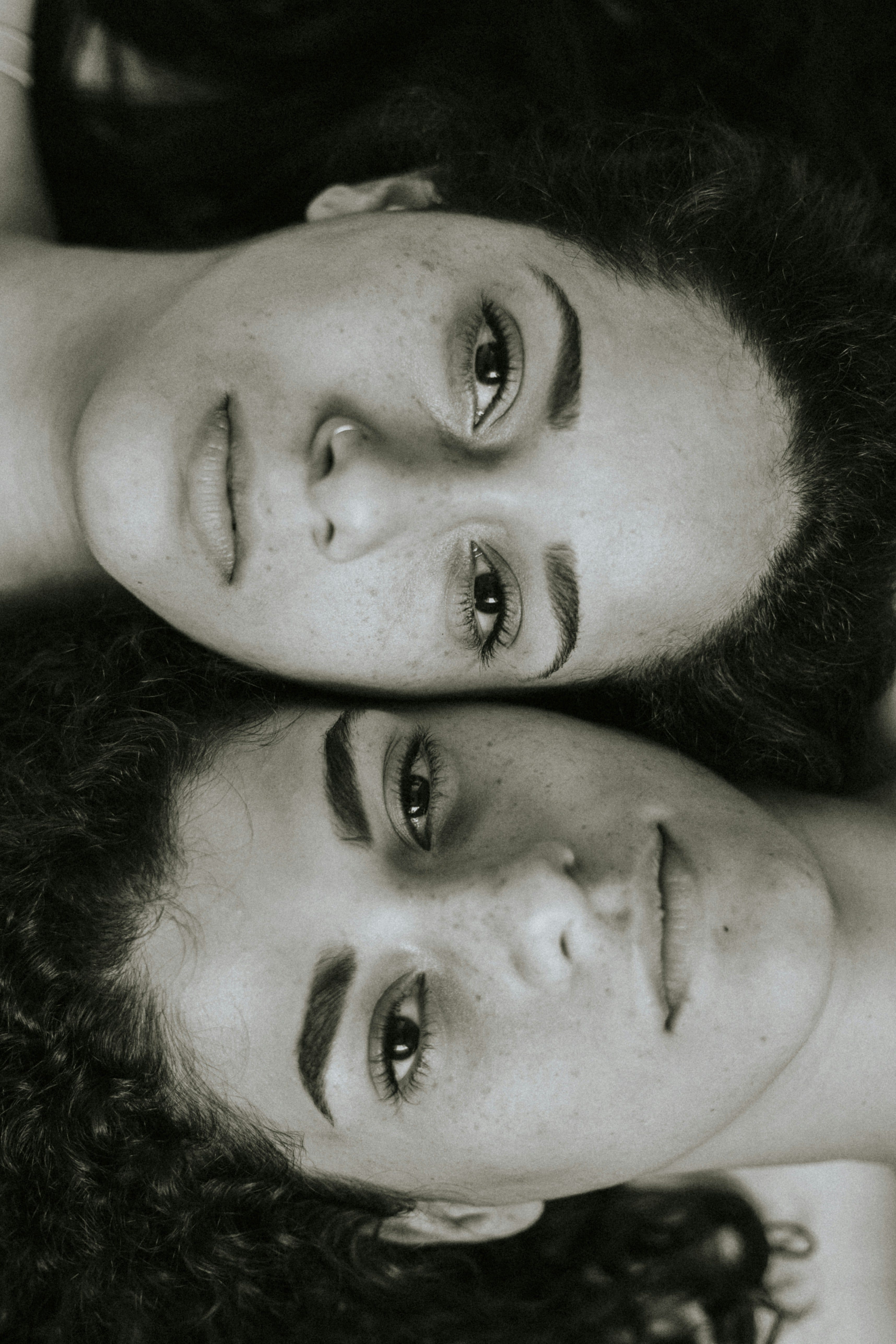
*Reader Note: This article is framed toward straight women, however cultivating friendships and community is universally powerful.
I have a suspicion.
A quiet one, but it’s been growing louder the longer I sit with women, the more stories I hear, and the more I watch marriages crumble under invisible weight.
I suspect that 80% of what many women are seeking in a partner—support, companionship, presence, shared purpose—isn’t something a single man can provide. Not because men are incapable, but because we are asking one person to fill the role of an entire village.
When I really listen to women describe what they long for—what they hope marriage (whatever that word means to them) will feel like—it rarely sounds like something one partner could give. It sounds like community. Like interdependence. Like extended family, close-knit friendships, play, ritual, celebration, a rhythm of life shared with others.
And yet, we keep trying to get it from one man.
When I survey the healthiest, most satisfying relationships among my clients and in my own life, they all have one defining feature: each partner has a full life beyond the relationship. Work, family, hobbies, chosen sisters and brothers. These people don’t rely on the relationship to complete them—they bring their wholeness to the table and let love become the salt of life.
When women try to extract everything from one man, it eventually becomes a silent negotiation:
“Be my lover, my co-parent, my best friend, my co-therapist, my helpmate, my cheerleader, my deep witness, my spiritual match, and my logistical teammate… or I will feel disappointed, abandoned, and unseen.”
It’s not wrong to want those things.
But we’ve been taught to look in the wrong direction.
Even in ideal circumstances, marriage is a complicated path. It’s a legal arrangement with a heavy past. As the Barbie movie so clearly parodied: women are still often offered two choices—Barbie, you can be my bride-wife or my long-distance, low-commitment girlfriend.
Neither feels like a real village.
And yet, the promise of family still draws us.
Becoming the “Smiths,” lighting birthday candles together, holding hands at the school concert—it feels like safety. Like meaning.
Even though half the time, it ends in disappointment or disillusionment, the dream is powerful enough to keep us saying yes.
But we have to ask ourselves:
Are we marrying him?
Or are we marrying the hope of community?
These are complicated questions, with no simple answers.
I live in a neighborhood built in the 1980s. Many of the original owners still live here. They are, for the most part, widows now. A few have become caregivers to husbands with dementia or chronic illness, but most women will outlive their partners. It’s in the data. Look at your own family tree—how many women end their lives single?
Many women marry older men. Even though, men are more likely to suffer long-term health issues, more likely to die earlier. More likely to struggle with post-retirement depression. The quiet math of heteronormative life is this: women often end up alone at the end.
So why do we keep pretending marriage will save us from loneliness?
I believe in romantic love. Deeply. I help women find it all the time—on their own terms, with men who match their values.
I believe in more traditional versions of family too. I’ve spent countless nights dancing in my kitchen or passing bowls around my dinner table, surrounded by children, laughter, music, and joy. I can’t think of anything more important than being a grandparent.
But my oldest child turns seventeen next month, she starts her senior year this fall.
The countdown has begun.
Six school years left till the last of three children transitions to whatever they choose next.
And when they do? It will not be a man who holds my hand the tightest in that void. It will be the women who’ve been holding me up all along. The women I raised my babies a long side of. The women who taught me how to become a mother. They’ll be the ones that really get what that journey entailed.
Your female friendships will almost certainly outlast every romantic relationship of your life.
These women will take senior ladies’ trips with you. They’ll bake cookies in the retirement home. They’ll sit beside you in the waiting room. They’ll know your dog’s name and all your heartbreak stories and how your coffee has to be made.
What if you took some of the energy you pour into finding or fixing a man you already have—and gave it to the women who will still be here long after he is gone?
What if you learned to settle conflict with women with the same devotion you apply to your romantic relationships?
What if you prioritized them?
Told them you loved them?
Let them matter?
These are the women who will show up when your baby is born. When your mother dies. When your car breaks down on the side of the road.
They will still be here.
Having strong, embodied women in your life takes an enormous burden off your partner. It allows romance to be what it’s supposed to be: beautiful, nourishing, imperfect—but not everything.
You can have the long-term support and belonging you want.
It already exists.
It’s inside the women around you.
So, from a coaching perspective I would invite you to take a moment today and ask yourself:
Which of your female friendships have the potential to be lifelong?
What could you do to nourish them?
How might you soften toward them, lean in, be honest, be generous, make space?
We say we want a village.
We’ve forgotten—we are the village.
I write primarily to support my small business, christinaelaine.com
I am a somatic coach, writer, and curriculum creator writing about the interior life of modern relating, weekly on Medium & Substack. I also host interviews on YouTube.